
It's 5:42 a.m., and you wake up startled. Your little one slept for six hours straight, the longest stretch of their life, and instead of feeling victorious, the first thing you notice is how heavy and full you feel. Then the second thought hits: wait, did I just skip a pump session? Did I just hurt my supply?
If that is you, take a breath. This is one of the most common moments I see with the families I work with. I'm a certified Pediatric and Maternity Sleep Consultant, a former night nanny, and a mom of seven. Sleep is my world, and so is protecting a new mom's rest. I want to be upfront about one thing: I'm a sleep consultant, not a lactation consultant. For anything specific to your supply, your own IBCLC and your baby's pediatrician are the right people to guide you. What I can do is help guide you through how milk, sleep, and your sanity fit together.
Below, I'll cover why nighttime milk removal matters, what a realistic overnight and early-morning routine can look like, how to keep burnout at bay, and where a portable primary pump like the BabyBuddha 3.0 fits in, because the pump you use shapes how long you are awake at night.
Why Might You Need to Pump Overnight in the First Place?
When people hear "night pumping," they often picture an exclusively pumping mom setting an alarm for 2 a.m. That is one very real version, and if it's yours, you will find plenty of guidance here. But it is not the only option.
If you are exclusively pumping, every session stands in for a feeding, so your overnight sessions are how your body keeps getting the signal to make milk while your little one sleeps.
If you are nursing or combo feeding, pumping can still earn a spot in your night. Here's a common scenario: your baby wakes up hungry in the middle of your sleep window. If you have a bottle of pumped milk in the fridge, your partner can offer that feed while you stay asleep. Your body still needs milk removed, so you will likely still need to pump or nurse at some point. The difference is that you get to choose when, whether that is right before you go to bed or right after you wake up (or somewhere in between), so your longest stretch of sleep stays protected.
That is really the heart of this whole post. Pumping at night is not only about protecting supply. It is also a way to optimize feeding and sleep together, so your baby gets fed, your body gets the milk removal it needs, and you get a real chunk of rest. The goal is to build a rhythm where all three can happen.
Here is where the pump itself starts to matter. A portable primary pump, like the BabyBuddha 3.0, lets you pump sitting up in bed, without getting up, walking to another room, or fully waking yourself. When a session can happen right where you are, it is far easier to go straight back to sleep afterwards, which is a big deal.
When Baby Starts Sleeping Longer, Do You Still Need to Pump at Night?
Here is the honest answer: it depends on your baby's age, your supply, and what you are trying to achieve. There is no single magic number of night sessions that works for every parent. Let me explain why this question matters and how to approach it.
Why Nighttime Milk Removal Matters
Milk production runs on supply and demand. When milk is removed, your body gets the signal to make more. When it is not removed for a long stretch, that signal quiets down.
Prolactin, the hormone that supports milk production, also follows a daily rhythm. Research on lactating women has found that prolactin levels peak overnight, roughly between 11 p.m. and 7 a.m. That is one reason many lactation professionals encourage keeping at least one overnight session in the early months, when your supply is still getting established.
That doesn't mean every mom needs to wake up at 2 a.m. forever. It means that when you drop a night session, it helps to do it thoughtfully rather than all at once.
What Lactation Professionals Generally Suggest
Every family's guidance is a little different, so treat the following as general information and not a prescription:
In the early weeks and months, most exclusively pumping parents are advised to pump frequently around the clock, including once or twice overnight. This is most important as you establish your supply. If you are also nursing, then you may only pump one session overnight and nurse for the others. Keep in mind babies will need between 1-3 overnight feeds in those early days and it's all about optimizing those feeds to promote longer stretches of sleep, so try to make sure your baby gets a full feed (which is smaller in the early days) before going straight back to sleep.
As a baby gets older, many parents can drop the middle-of-the-night session over time, especially once supply is steady and your baby is naturally sleeping longer overnight. This is true for both nursing and pumping. Some do this around the 3- to 6-month mark, but your timeline may look different (keep in mind many breastfed babies need a middle-of-the-night feed for longer than this).
Go gradually. Rather than stopping cold, many parents shift the overnight session a little later each night for several days to see how their body handles it, or pump for a shorter time, until they are ready to drop it. Stopping abruptly can lead to clogged ducts and, in some cases, mastitis.
Watch your body. Fullness, hard spots, or a dip in output are your cue to add a session back or talk to your lactation consultant. Also keep in mind, you may drop a pumping session overnight because your baby is sleeping nice long stretches, but then sleep changes (hello 4 month regression) and you find sleep completely shifts again. This is when bringing back a session is possibly needed.
One more thing I tell every mom: make sure your baby is gaining well before you let any stretch go long. If your pediatrician has given you the green light on weight gain, a longer sleep stretch is a win. If you're not sure, ask at your next visit.
Protecting Your Sleep and Your Supply
The goal is not to choose between your rest and your milk. The goal is to make night pumping as calm and efficient as possible so you can get right back to sleep. Night pumping does not have to mean a long stretch awake in the dark.
Realistic Overnight and Early-Morning Routines
Here are a few approaches I see work for real families. Pick the one that matches your situation, and adjust as you go.
The one anchor session. If your baby sleeps a long stretch, you may keep a single overnight session and let everything else around it flex. Many parents choose a time near the end of their first long sleep block so they aren't waking constantly.
The slow shift. If you're ready to drop a session, move it 30 to 60 minutes later every night or two. The goal is to ease your body toward a longer gap without a sudden jump.
The early-morning session. Waking up full is common as baby sleeps longer. Plan an early session as your "reset" and treat it as your main nighttime milk removal.
The partner feed. If you are nursing or combo feeding and your baby tends to wake during your sleep window, have a bottle of pumped milk ready so your partner can handle that feed. Then pump or nurse before bed or after you wake, so your body still gets the milk removal it needs without costing you your longest stretch.
A protected stretch for you. Try to guard at least one longer block of sleep for yourself, ideally four to five hours. Your recovery is not optional, and it is part of the plan.
Another option if you need to pump more than once is to book each pumping session on both ends of the night. One a few hours after your baby has gone to sleep, and one in the early morning hours.
Make the Setup Do the Work
The less you have to think at 3 a.m., the faster you fall back asleep. Here is the setup I recommend:
Keep the pump, flanges, and bottles on your nightstand, fully assembled, before you go to bed. A portable pump like the BabyBuddha 3.0 means you can stay propped up against your pillows and pump right there in bed, without a trip to another room.
Use a dim night light instead of a bright overhead light, and skip the phone scroll.
Let your partner handle washing parts and bottle prep if that's an option.
Keep a clean set of parts on hand so you are not washing in the dark.
Save your go-to pump settings so you can start right where you left off, even half-asleep.
Setting Expectations for Feeding, Pumping, and Recovery in the Newborn Stage
If you are in the newborn stage, I want to give you a little grace. The fourth trimester is not the time to chase perfection.
Your body is recovering. Your baby is still figuring out the world. Feeding, pumping, and healing are all happening at the same time, and sleep gets fragmented for everyone. That is normal.
A few realistic expectations:
Early days are frequent. Early pumping is typically frequent, and that is a phase, not a forever plan.
A longer baby sleep stretch is a good sign, not a failure. It means your little one is growing and settling, and it gives you a chance to recover.
Your needs count. If lack of sleep is affecting your mental health, that matters as much as any milk volume. Please speak up to your provider.
Progress is not a straight line. Growth spurts and developmental leaps can shift sleep and supply for a few days at a time.
Reducing Stress and Burnout for Exclusively Pumping Parents
Exclusively pumping is a full-time job layered on top of caring for a baby. I want every pumping parent reading this to hear me: you are doing something extraordinary, and you are allowed to protect your own well-being while you do it.
A few ways I coach families through it:
Share the load. Let your partner or a support person take the baby's wake-ups or handle bottles, so you can pump and sleep without juggling both.
Define "good enough." You do not need a perfect schedule. You need one that you can actually keep.
Remove small frictions. Tiny hassles add up when you are exhausted. A pump you can set up quickly and use from your bed, with settings you already know, takes real weight off your night.
Check in with yourself weekly. Ask what is working, what is draining you, and what one thing you could simplify.
Ask for help early. A lactation consultant, a postpartum doula, or a sleep consultant can help you adjust before burnout sets in.
Be kind about the end date. Whether you pump for six weeks or sixteen months, you made the choice that worked for your family.
Why a Primary Pump Matters
This is where tools come in. A primary pump is the pump you rely on for your core, regular milk removal, rather than one you reach for occasionally. When you are pumping at night, the pump matters more than you might expect, because every minute you spend awake is a minute you are not sleeping.
That is why I like to look at a primary pump through a sleep lens. Does it help you get set up fast? Does it let you finish and get back to bed? Can you rely on it day after day? Those practical questions shape your whole night.
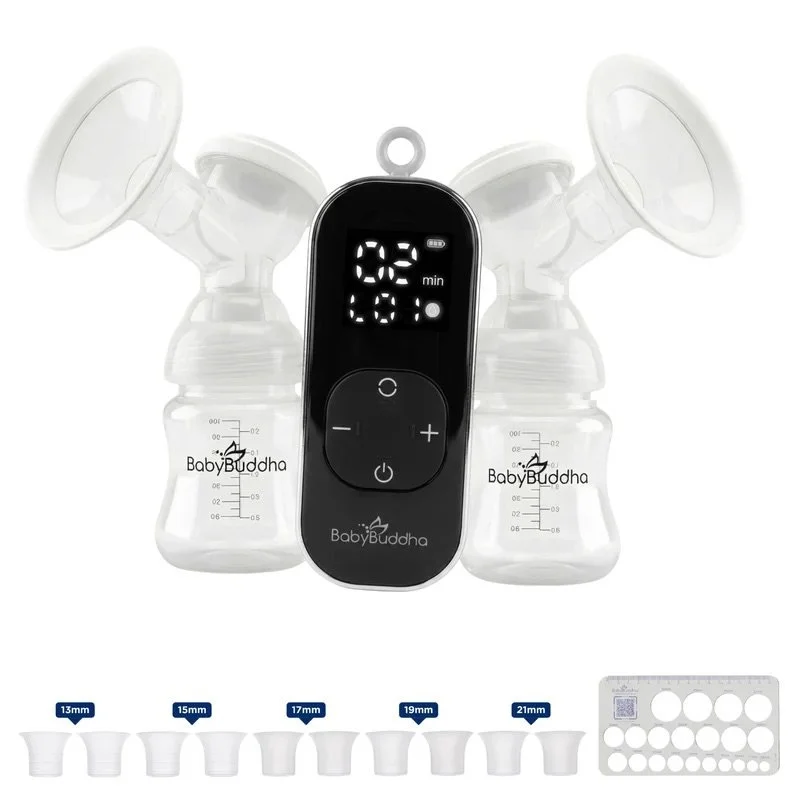
My Take on the BabyBuddha 3.0
The BabyBuddha 3.0 is a portable, double electric primary pump. Here is what stood out to me from a sleep-first perspective.
Modes and settings.
It offers four pumping modes with 30 settings in all: Soft Stimulation, Classic Stimulation, Classic Expression, and the new Double Drop Expression. The Double Drop mode uses the same suction strength as Classic Expression, but with a higher cycle rate, which BabyBuddha describes as a faster, doubled rhythm rather than a stronger pull. With new softer settings alongside the original ones, you can choose the intensity that works for your body, and that range matters at night, when you may want to start gently and then move to a pace that gets the job done.
Flange fit.
Comfort and fit are a big deal for anyone pumping regularly, and especially for someone doing it half-asleep. The 3.0 comes with the EasyFit flange system: two 24 mm flanges and ten inserts, in sizes from 13 to 21 mm, plus a flange sizing ruler. That means you can find your fit without ordering extra parts first.
Pump from bed.
It charges by USB-C, and a lanyard is included. Because it is portable, you can pump sitting up in bed. You do not have to get up, turn on bright lights, or move to another room, which is a big deal when your goal is to be back asleep in minutes. If you would rather be somewhere else, it is just as easy to bring it to the couch or the nursery.

Milk removal efficiency.
Some pumps I have used in the past are powerful, but I am constantly having to adjust the suction or reposition the fit because it wasn't extracting the milk properly. And for me personally I have struggled with pumping in the past because the milk removal wasn't what I needed it to be. And even though I am pregnant and not currently pumping, I am excited to use the BabyBuddha postpartum because when I tested the fit and power of the pump I knew it would work for me the way I need it to: to remove milk efficiently and in the exact mode that I need it to.
That efficiency is what matters most at night.
Once you find the settings that work for your body, your sessions can get quicker, because you are not stopping to adjust or reposition. A shorter session means you are back to sleep sooner, so night pumping does not have to mean a long stretch awake.
Finding Your Comfortable Setting
Some people assume a strong primary pump has to feel intense or sound loud. The 3.0 is built so you can choose your intensity. Between the softer settings, Double Drop mode, and the original settings, you have plenty of room to find what feels right. The BabyBuddha team shares that the sound is comparable to a standard primary pump, and quiet enough to use next to a sleeping toddler.
Here are a few practical tips for dialing it in:
Start low and build. Begin in Soft Stimulation to get your milk flowing, then move up to Classic Expression or Double Drop Expression. Raise the intensity one level at a time until you find the highest level that still feels comfortable. Pumping should never hurt, and more intensity is not always better.
Try a different mode before a stronger level. If your usual rhythm isn't working, switching to Double Drop gives you a faster rhythm at the same suction strength as Classic Expression.
Check your flange fit. Use the sizing ruler and the inserts to find your best match, and recheck it if anything feels uncomfortable.
Do a practice run in the daytime. Try your settings in a quiet room before your first overnight session, so you know what to expect in your own bedroom.
Note your night settings. Jot down the mode and level that feel best so you can start there when you are half-asleep.
And as with any pump, if you feel pain or are not seeing the output you expect, check in with your lactation consultant.
How It Fits the Plan
If you want to protect your nighttime milk production while your baby sleeps longer stretches, the aim is simple: keep the sessions you need, and make each one as efficient and restful as possible. A dependable primary pump you can use from bed, a prepared nightstand, and a plan you can actually follow are the pieces that make that possible.
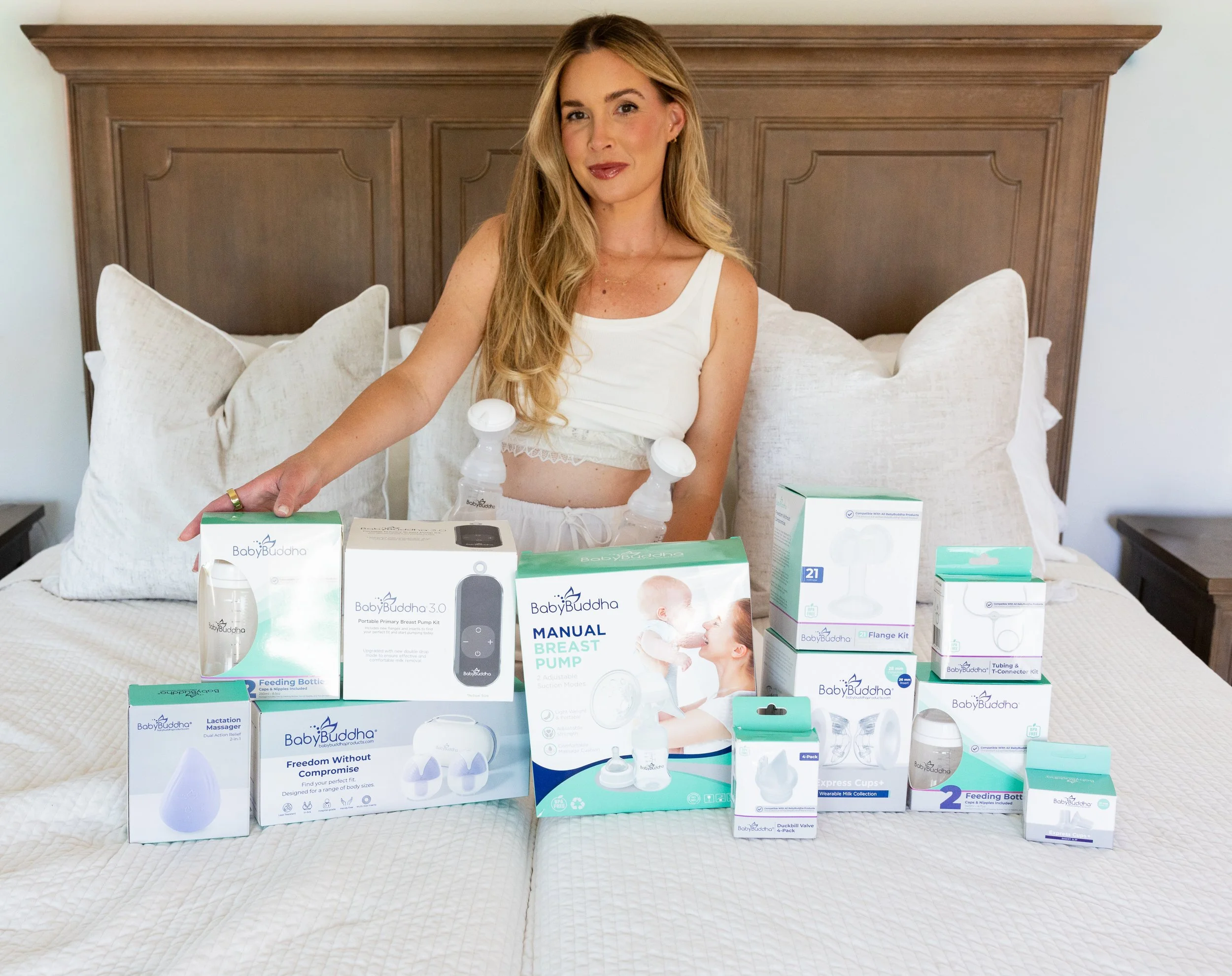
Ready to see if it's right for you? Explore the BabyBuddha 3.0 here.
A Realistic Way Forward
Your baby sleeping longer stretches is something to celebrate. It does not have to come at the cost of your supply, and it should not come at the cost of your health either.
Talk with your pediatrician and your lactation consultant about what is right for your baby's age and your supply. Keep the sessions that matter, shift or drop the ones that don't, and build a setup that lets you pump quickly and fall back asleep. Be gentle with yourself along the way. If you are looking for a primary pump to anchor your night routine, the BabyBuddha 3.0 is a great place to start.
From my family to yours, I hope you and your little one get plenty of rest.