Baby Overheating in a Swaddle? What Parents Should Know About Sleepwear and Keeping Your Baby Cool
This post is sponsored by Momcozy. We only partner with brands whose products we'd genuinely recommend to our own families.
I'm a certified Pediatric and Maternity Sleep Consultant, a former night nanny, and a mom of seven soon-to-be eight. Since starting My Sweet Sleeper, I've worked with thousands of families all over the world, and one question comes up every single summer without fail: is my baby too hot in their swaddle?
It's 2 a.m., and you've made your way into the nursery for a feeding. You lift your little one out of the crib and notice the back of their neck feels damp, or their hair is stuck to their forehead in little curls. Their cheeks look flushed, almost sunburned, even though they've been asleep in a dark room all night.
I've had this exact moment with my own babies, and I've walked hundreds of exhausted parents through it too. Below, I'll share what I actually look for when I'm assessing overheating, what I recommend babies wear once the temperature climbs, and my honest, hands-on take on two sleepwear pieces I tested myself this summer: the Momcozy Airflow Mesh Swaddle and the Momcozy 1.5 TOG Sleep Sack.
How Can You Tell If Your Baby Is Too Hot at Night?
Nighttime Sweating
If you've ever noticed your baby's hair is damp at the roots or their neck feels sticky under your fingers, chances are they've been sweating. This is one of the clearest physical signs I look for that a baby is running warmer than they should be. Babies don't regulate body temperature as efficiently as older kids or adults do, so by the time you notice sweat, they've likely been warm for a while already.Skin and Behavior Changes
Flushed cheeks, a chest that feels warm to the touch, or a baby who seems more restless than usual can all point to overheating. Some little ones squirm more, some seem unusually fussy when they wake, and some actually sleep more deeply than normal, which I tell parents is worth paying attention to rather than treating as a reassuring sign. Watch for any shift from your baby's typical pattern, not just one symptom on its own.
Chest and Neck Checks
Here's a habit I recommend to every family I work with: place two fingers on the back of the neck or along the chest rather than checking hands and feet, which are naturally cooler and not a reliable gauge of how warm your baby actually is. If the skin there feels hot or damp instead of warm and dry, that's your cue to remove a layer or check the room temperature.
What Should Your Baby Wear to Sleep on Hot Summer Nights?
Once you know the signs, the next question is practical. What actually goes on your baby's body once the sun goes down and the house is still holding onto that summer heat?
Room Temperature
Sleepwear can only do so much if the room itself is working against you. I generally recommend a range around 68 to 72°F (20 to 22°C) for infant sleep. A fan for gentle air circulation, blackout curtains to block afternoon heat, and a simple room thermometer make a bigger difference than most parents expect.
Lightweight Layers
The rule of thumb I use with families is one layer more than what feels comfortable to an adult in a short-sleeve shirt, not several layers stacked on top of each other. On hot nights, that usually means a single lightweight bodysuit under the swaddle or sleep sack, and nothing more.
Breathable Swaddling
For the swaddle itself, fabric matters just as much as fit. A swaddle made from mesh or lightweight muslin allows air to move through instead of trapping heat against the skin, which matters most for babies who sleep tightly wrapped for hours at a stretch.
Muslin or Cotton Mesh: Which Swaddle Fabric Is Better for Hot Weather?
Parents shopping for a breathable swaddle usually land on two front-runners: muslin and cotton mesh. Both are popular, and both get marketed as summer-friendly, so it's worth understanding what actually separates them.
Fabric Construction
Muslin is a loosely woven cotton fabric, prized for being soft and lightweight, with a texture that softens further after repeated washing. Cotton mesh takes a different approach entirely. Rather than a tight, flat weave, it's built with small open gaps directly in the fabric, similar to athletic mesh, which lets air pass through far more freely than standard woven cotton.
Airflow and Fit
In practice, this construction difference shows up as a real gap in airflow. Mesh fabrics are generally built to move more air than standard woven cotton, which is exactly why mesh has become the search term parents reach for when they're specifically hunting for a breathable swaddle for summer.
My hands-on take on the Momcozy Airflow Mesh Swaddle
I got my hands on the Momcozy Airflow Mesh Swaddle, a newborn swaddle built for babies 0 to 3 months, and I washed it, wrapped it, and used it myself before writing a word about it.
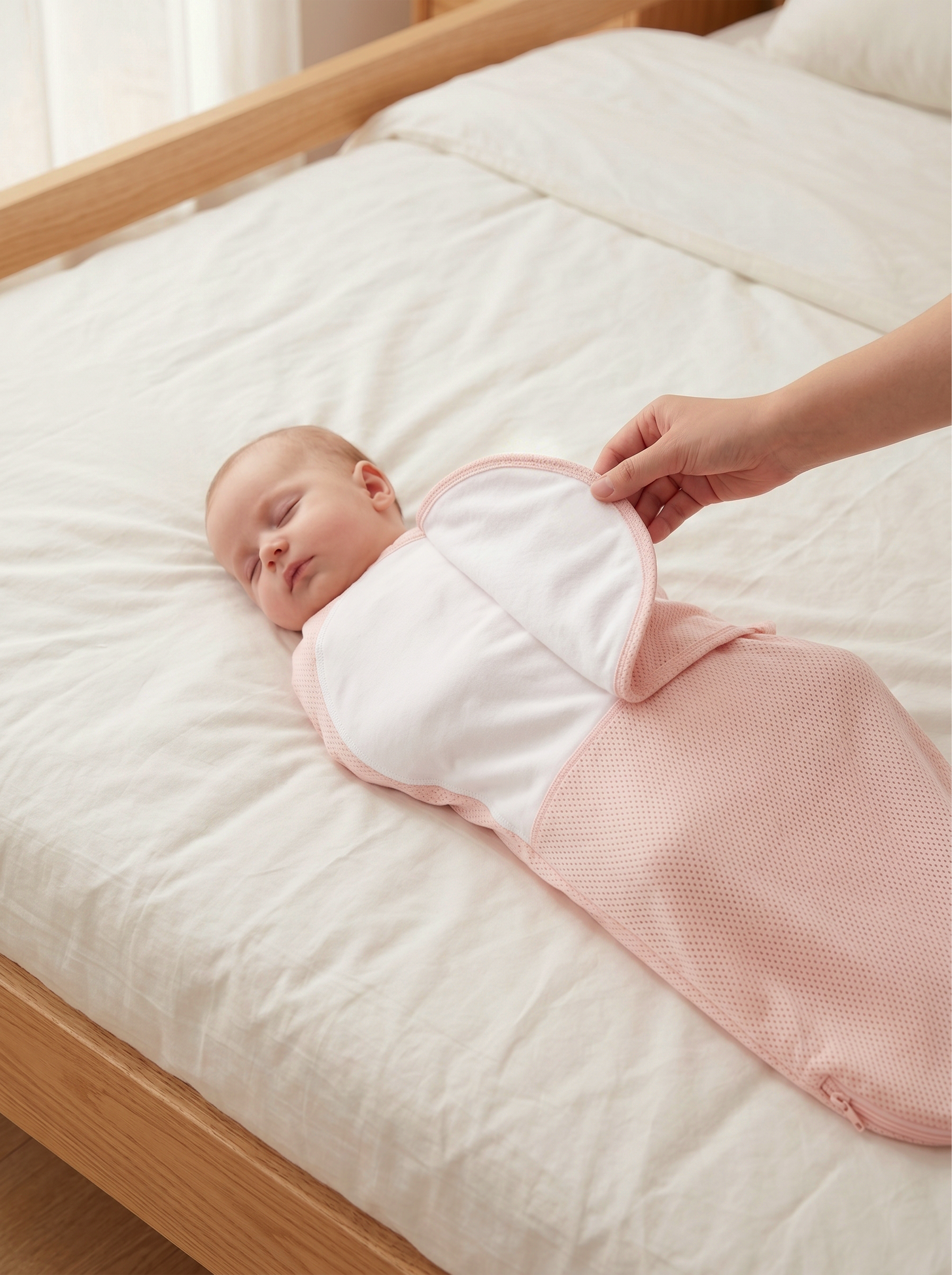
The open mesh structure is immediately visible when you hold the fabric up to the light: small, consistent perforations running across the entire panel rather than a few decorative cutouts. Momcozy notes the 100% cotton mesh is designed to offer up to 250% more airflow compared with standard cotton fabric, and after handling it, the construction genuinely backs that claim up.
In hand, it feels noticeably lighter and less bulky than many of the thicker traditional swaddles I've worked with over the years. That lighter weight doesn't come at the cost of structure, though. The stretchy mesh held a secure fit even through the small startle movements and wriggles that are completely normal for a newborn, so the wrap didn't loosen or shift out of place overnight.
The lower portion leaves generous room for natural hip and leg movement, following an IHDI hip-healthy design rather than pinning the legs straight, which matters for healthy hip development. Altogether, this is a fabric built to deliver the kind of airflow parents are specifically looking for when they search for a breathable swaddle or one made for summer.
Wrapping Experience
Fabric is only half the equation for tired parents. How a swaddle actually goes on, at 2 a.m., half-awake, one-handed, matters just as much.
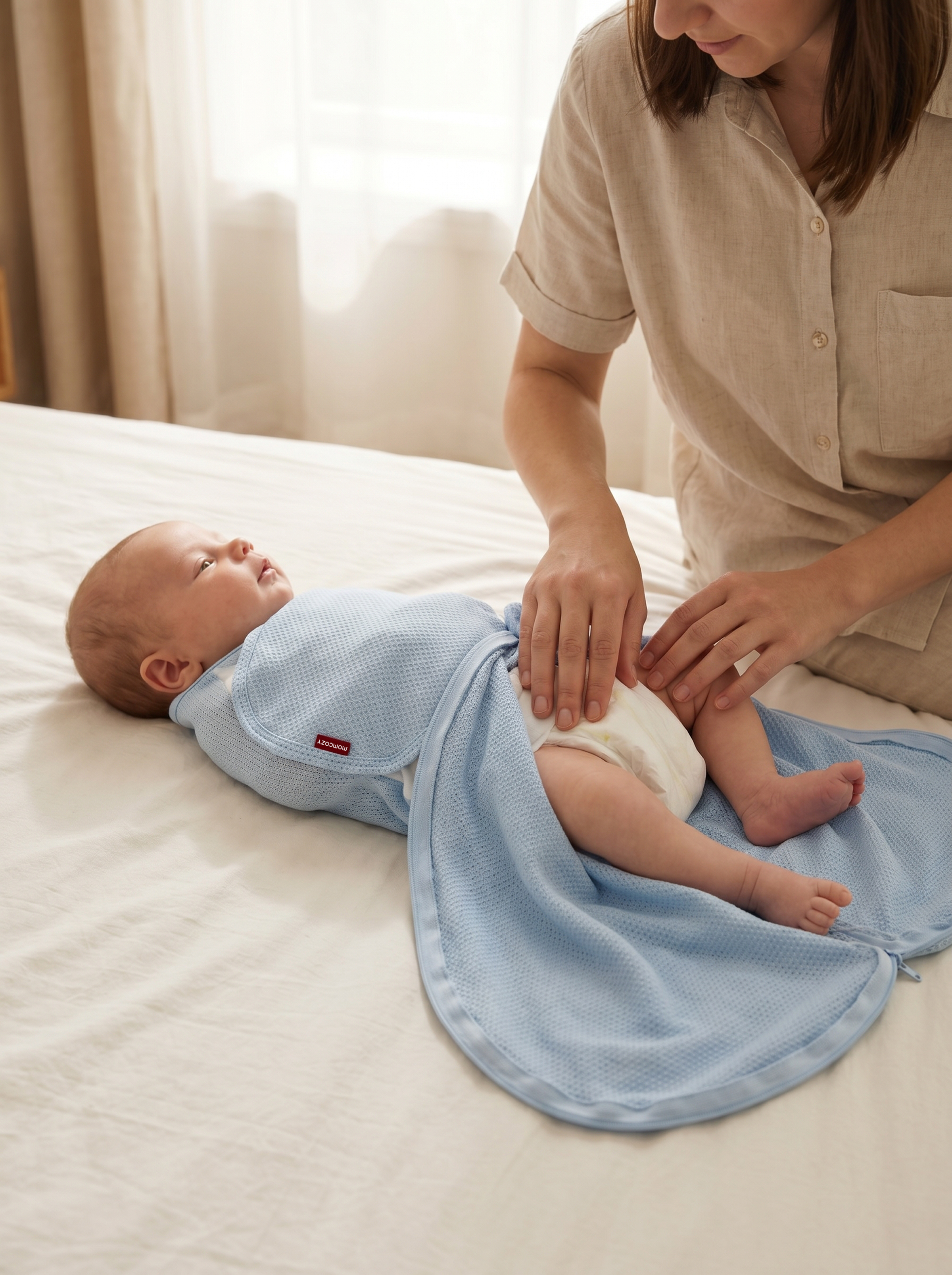
The Momcozy swaddle uses a two-step design: a hook-and-loop wrap across the top, followed by a bottom zipper. I found it intuitive enough to pick up on the first try, with no folding diagrams or extra straps to puzzle through in the dark.
The hook-and-loop closures are specifically engineered to be quiet, and I noticed that during real adjustments. Rather than the sharp rip most parents associate with traditional Velcro, the sound was noticeably softer, which matters when you're trying to re-secure a swaddle without startling a baby who's finally drifted off.
The two-way zipper at the bottom is arguably the most convenient detail for nighttime diaper changes. It opens from the bottom, so a middle-of-the-night change doesn't require unwrapping the whole swaddle and starting over, just the lower half, in and out, with your little one staying snug and mostly asleep through the process.
From my perspective as a sleep consultant, this is really a swaddle built around one job: keeping a newborn cool. The mesh construction is the whole point, and it makes the most sense in a warm nursery or during the hottest months, when a standard cotton swaddle would trap too much heat against your little one's skin.
When Should You Move From a Swaddle to a Sleep Sack?
Swaddling has a natural endpoint tied to development, not a specific age on a calendar.
Rolling Signs
The guidance I give every family I work with, and the guidance widely recommended by pediatric and sleep safety organizations, is to stop swaddling with arms in as soon as a baby shows any signs of rolling, even a single attempt. A swaddled baby who rolls onto their stomach loses the ability to push up or reposition their arms, which is why I take this transition point seriously with every family. Once you see that first roll attempt, whether it's during tummy time or an unexpected wiggle in the crib, it's time to move on from a traditional swaddle.
Move With Your Baby
This is where a sleep sack comes in: sleepwear that keeps the cozy, contained feel of a swaddle while giving arms and legs full freedom to move. I want to be clear here, because I hear this misconception a lot: a sleep sack doesn't teach rolling, doesn't prevent it, and doesn't guarantee a baby can roll safely on their own. That's a developmental milestone your baby will reach at their own pace, with supervised tummy time playing its part. A well-designed sleep sack simply gives your baby sleepwear that keeps pace with them as they move through this stage, rather than restricting them the way a swaddle is designed to.
My hands-on take on the Momcozy 1.5 TOG All-Season Sleep Sack
The Momcozy Baby Sleep Sack 1.5 TOG is built for babies 0 to 24 months and designed as the next step once a swaddle is no longer appropriate. I put this one through its paces too: washed it, adjusted the snaps, and used the zipper for real diaper changes rather than just looking it over.
1.5 TOG Comfort
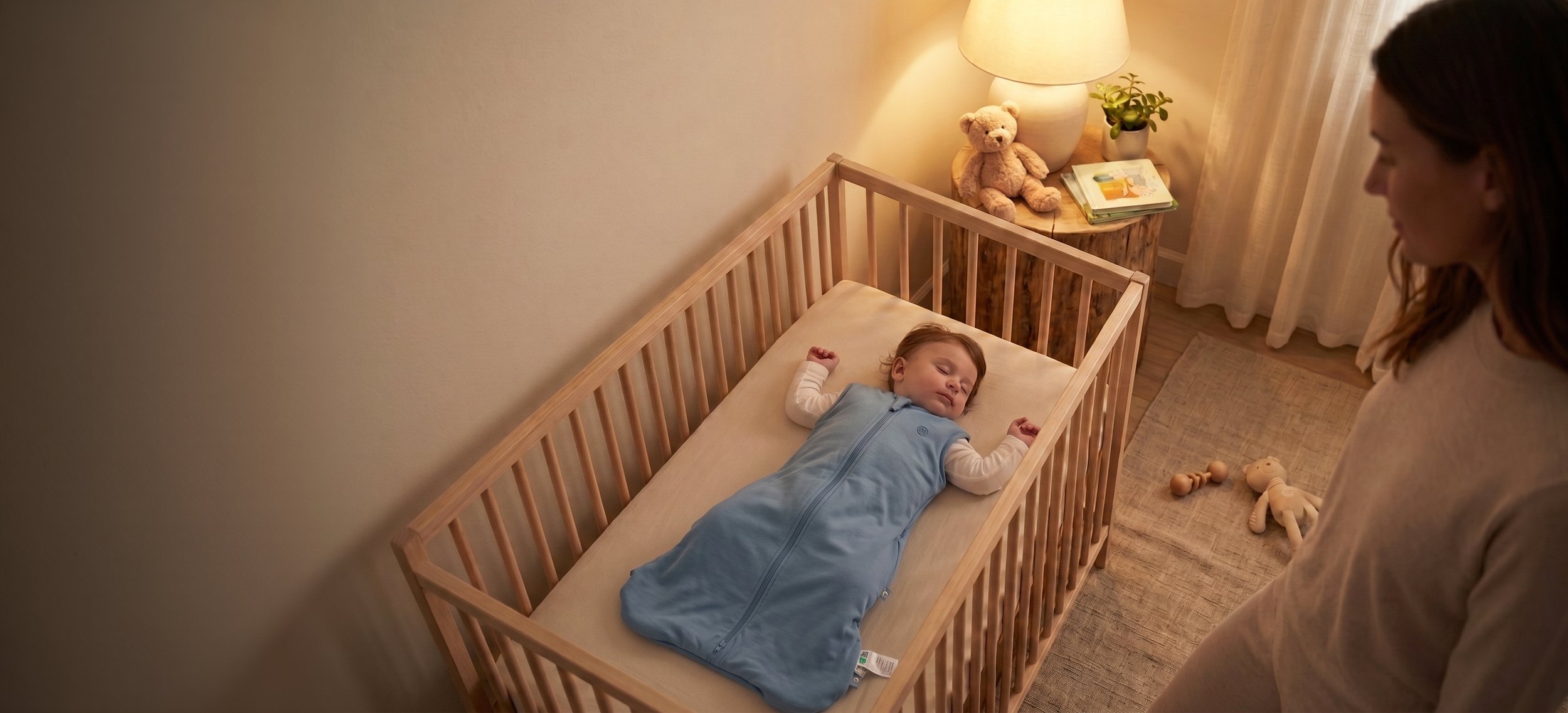
The bamboo-derived fabric has a genuinely soft, almost silky feel against the skin, and it's breathable and moisture-wicking, which matters a great deal for a garment your baby may spend eight-plus hours in overnight. At a 1.5 TOG rating, it's built for rooms in the 68 to 73°F (20 to 23°C) range, offering moderate, balanced warmth rather than the heavier insulation of a higher-TOG option meant for colder rooms. It doesn't feel bulky on, which I noticed right away compared to the stiffer, thicker sleep sacks I've handled in the past.
Where the mesh swaddle is built to keep a newborn cool, this sleep sack is designed to strike a middle ground: warm enough for a mobile baby who's kicked off blankets and no longer swaddled, but still breathable enough that it doesn't run hot the way a heavier, high-TOG sack would in a warm room. That balance is really the point of a 1.5 TOG rating. It's meant to work across a wider range of temperatures rather than being built for one extreme or the other.
One detail that genuinely stood out to me, and one I don't see often on sleep sacks of this style, is the adjustable SnapFit design. Rather than a single fixed size, snaps along the body let parents take the fit in for a smaller baby or let it out as they grow, so the sack can stay properly fitted through several months instead of needing to be swapped out the moment your little one has a growth spurt. It's a small feature, but after testing it myself, it's one of the more genuinely useful ones on this piece.
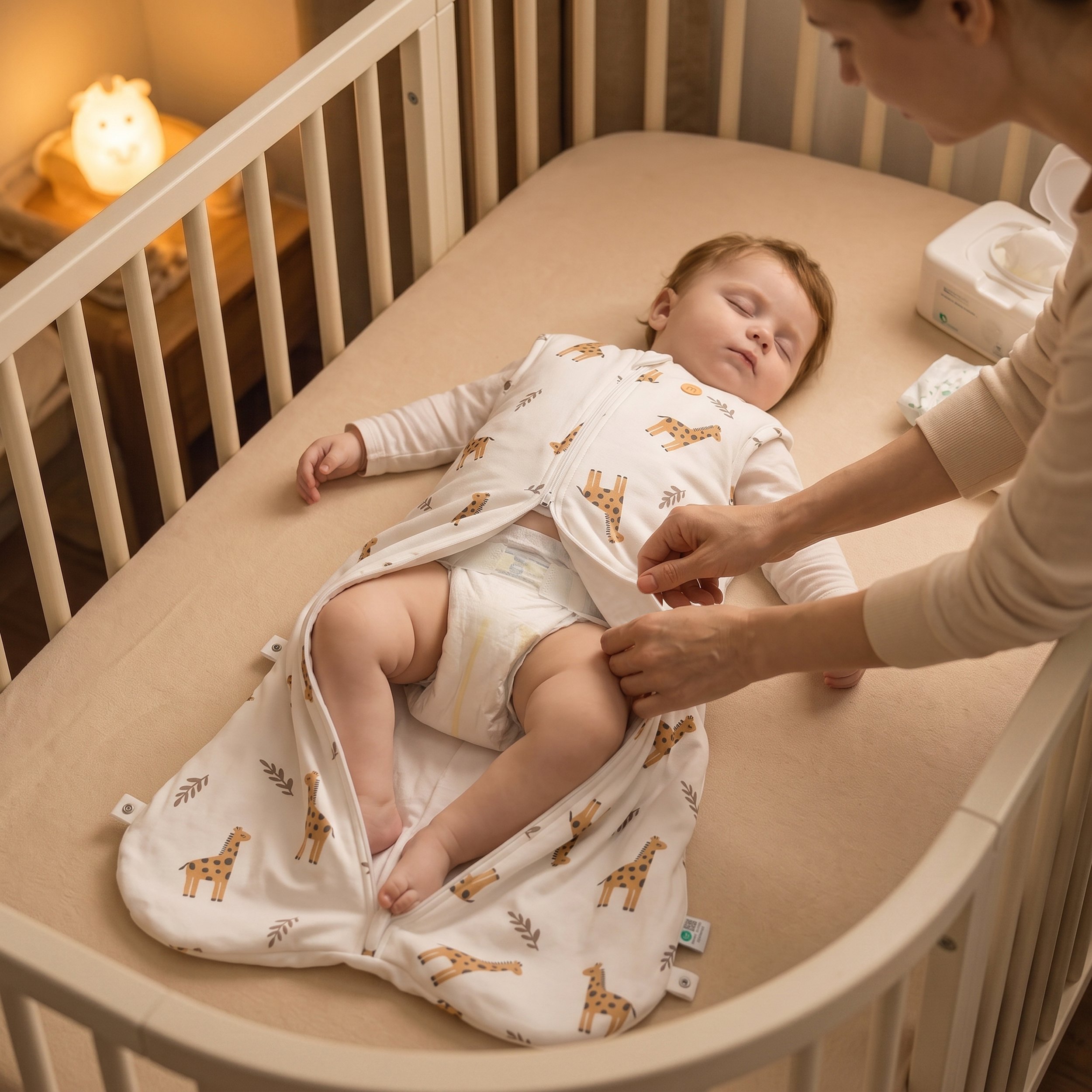
The roomy lower design gives real space for kicking, stretching, and repositioning through the night, following the same IHDI hip-healthy approach as the swaddle. For a baby who's newly mobile and starting to shift positions on their own, that extra leg room makes a visible difference compared to a snug, tapered sack.
The two-way zipper carries over from the swaddle line, and it remains one of the most practical details on the sleep sack. It's a genuine convenience for nighttime diaper changes, since the bottom-opening zipper means a change can be completed without fully removing the sleep sack. Your baby stays warm, stays mostly settled, and you're back to soothing them rather than wrestling with snaps or a stuck zipper pull.
I want to say this plainly, because I never make promises I can't back up: a sleep sack, this one included, isn't a sleep-training tool. It won't prevent nighttime waking, and it doesn't guarantee uninterrupted sleep through the night. No piece of sleepwear can promise that. What it can do is give your baby a comfortable, breathable, move-friendly layer for the stage that follows swaddling.
The Road to Better Sleep
Overheating is one of those parenting worries that's easy to dismiss until you feel it for yourself: a damp neck at 2 a.m., flushed cheeks during a feeding, a baby who seems just a little too warm to settle. In my experience, most of it comes down to a few consistent checks: room temperature, layering, and fabric choice.
For the newborn stage, a breathable swaddle built with real airflow, like a cotton mesh design, can make warm nights considerably more comfortable without giving up the snug, secure feeling that helps babies sleep. Once your little one starts showing signs of rolling, moving to a roomy, breathable sleep sack keeps that same comfort going while giving them the freedom to move safely.
Whichever stage you're in, the goal stays the same: a baby who's comfortable enough to sleep well, and a parent who can check in without worry.